All Categories
Featured
Significant Market Milestones for 2026 Growth
Table of Contents
Thank you. And we also have Clinton Anderson, the CEO of 4th, who will be moderating the conversation with Jason. Jason, how about I let you provide the audience some info about your background and you can also inform them a little bit about Chop Shop. And after that I'll let you take it from there, Clinton.
My name is Jason Morgan, CEO of Original Chop Shop. We bought the brand in 2016three unitsand I've grown it to 26. After a quick stint of attempting to be an accounting professional for about a year and a half, I transitioned into gambling establishment property and worked in corporate financing.
I was the very first employee there after private equity bought business. Helped grow that from 20 to 150 locations, took it public in 2014, and then left about a year and a half after going public to do this at Chop Store. My hope is that we can replicate the success we had at Zos, and we're off to a truly good start.
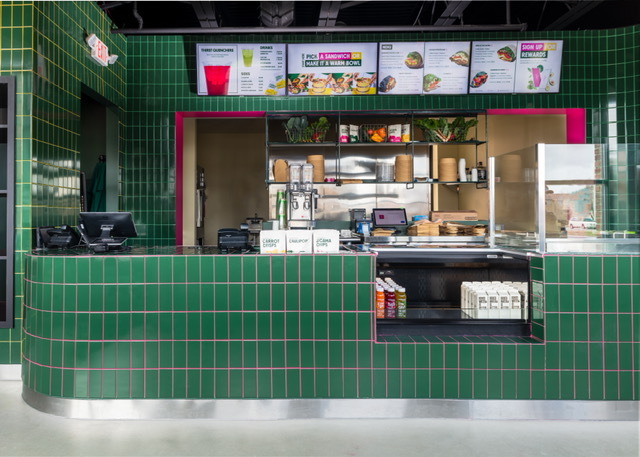
We're at the counter, we bring the food to the table. It is mostly protein bowlsabout 40 percent of the mix. We also do salads, sandwiches. The secret to the program is we have a drink component also with fresh-squeezed juices and protein shakes. We do all stables, we do breakfast throughout the day.
A little more complex than some of the walk-the-line ideas that are out there, but we believe we've got something pretty unique. We're going to include another shop this year and at least four stores next year. So we will be 31 approximately shops by the end of next year.
Top Benefits of Fast Casual Franchising in 2026
Hey, everyone. It's terrific to be with you once again. My name is Clinton Anderson. I'm the CEO here at 4th. I've remained in this role for about 6 years. 4th, as a lot of you know, is a leading company of software options to the restaurant and hospitality industry. Our objective is to help our clients achieve success in driving profitability and being efficientmanaging labor, managing inventory, and essentially providing them with tools they need to provide their vision.
It's uncommon to have business that are cherished and growing rapidly, that can duplicate that success every year. Jason, among the reasons I was so thrilled to have you join our session is the success at Zos was remarkable. I've just satisfied a handful of brand names where there was such a strong consumer affinity for the brand.
And now you're doing the very same thing at Chop Shop. When you talk with clients about Chop Shop, they enjoy the place. They discuss its distinction. And to be able to take what is a relatively complex principle in terms of delivering a fantastic experience for the consumer, and be able to grow that from a couple of stores to now north of 30 shops next yearit's amazing.
We're going to speak about how to scale a dining establishment service. Every restaurateur I ever talk to has dreams of taking one store, two shops, 5 shops, and turning it into something much biggerexpanding throughout the city, across the state, into multiple states, and ultimately national, even international reach. But it's not simple, especially in today's environment.
It's not an easy time to drive profitability and development at the exact same time. How do you scale it and make it effective? Second, beyond innovation, how do you scale excellent teams?
Key Strategies to Growing Hospitality Footprints
The first concern I have for you, Jasonlook, you have actually done this two times now in the restaurant industry. What has your experience been in terms of what it takes to truly drive success in broadening restaurants?
We talked a little bit before we began about LinkedIn, and I've got a post teed approximately follow this next week about what the playbook is likepoint by pointfor growing a company. To me, among the crucial things, and I feel extremely fortunate, is that both brand names I have actually been included with are special.
And there's nothing precisely like Chop Shop in terms of what we're doing with a big, varied menu. Many brand names today are really singularly focused in terms of what they're providing from a food. I seem like we began at a benefit with both brands by having something unique that filled a niche nobody else was doing.
A lot of it starts with the brand name. Does your brand name have something unique that no one else is doing?
Corporate Updates: Regional Milestones in 2026
The second thingI came from a financing background, so a lot of my learnings are more financing and data-driven versus a lot of early startup restaurateurs who are imaginative types. They love the food, they constructed the menu, they built the brand.
They don't know their breakeven sales. They do not understand how margin improves as sales boost. They do not comprehend cash-on-cash returns. I've seen numerous companies where the numbers simply don't work. And yet individuals state: let's open 10 more. And I'll state: why? It doesn't earn money. Stop. You require to discover a principle that is distinct.
The Benefits in Early Brand Entry 2026
If you don't have those two things, you should not be building stores. Because as I hear your description, you have actually highlighted 3 things: execution, brand differentiation, and financial viability.
The Benefits in Early Brand Entry 2026Regional Milestones in Brand Scaling
Second, you need an engaging brand name or unique concept that resonates with clients. And third, the math needs to work. If you do not comprehend your system economics, your repaired and variable costs, you might be expanding blind and losing money. Precisely. And another crucial lesson is about going into brand-new markets.
But when we expanded to Dallas, I expected new stores to do 5070% of Phoenix sales in the first year. Too lots of operators assume new markets will open at complete volume the first day. That practically never takes place. And when the shops open slow, but you've signed leases and built a financial model based on greater volumes, you get overextended.

Latest Posts
Tips to Grow Your Fast Casual Sector Share

Vital Steps for Hitting Global Expansion
Selecting the Top 2026 Business Venture